

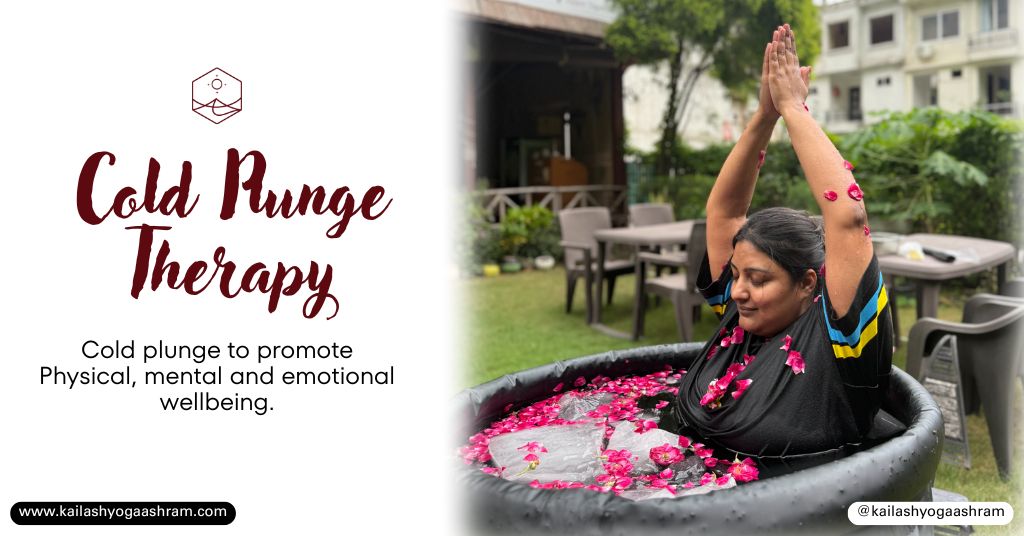
Cold Plunge
Cold Plunge Therapy for Past-Life Grief
Cold plunge to promote Physical, mental and emotional wellbeing.
What if healing isn’t always about sitting quietly, closing your eyes, and trying to think positively?
Sometimes, healing asks you to do something completely different.
Something uncomfortable. Something that makes you breathe deeper, face your fear, and stay present.
That’s where cold plunge can become a surprisingly powerful part of a 5-day Yoga and Meditation Retreat, especially for people exploring past-life grief, emotional heaviness, or feelings they find difficult to explain.
At Kailash Yoga Ashram, the focus of emotional healing is not simply to “forget” painful experiences. The retreat creates space for self-reflection through Yoga, meditation, breathwork, nature experiences, and other practices that help you reconnect with yourself.
What Is Past-Life Grief?
Past-life grief is a spiritual idea. Some people experience deep sadness, fear, attachment, or other emotional reactions that don’t seem to have an obvious explanation in their present lives. They may feel connected to a person, place, situation, or loss in a way that’s difficult to put into words.
For people who believe in reincarnation, these feelings may be understood as emotions carried over from another lifetime. But you don’t have to prove where the feeling comes from. The important part is how the feeling affects you now.
A Yoga Retreat can give you a quiet environment to explore these emotions without immediately trying to label or judge them.
So, Where Does a Cold Plunge Fit In?
At first, cold plunge might sound like the last thing you’d want during a peaceful retreat in Rishikesh. You’re probably thinking, “I came here to relax, and now someone wants me to sit in cold water?”
Fair question.
But a cold plunge isn’t about suffering for its own sake. Experience can be used as a mindfulness and presence practice. When your body suddenly meets cold water, your attention becomes very sharp. You can’t easily think about yesterday. You can’t spend five minutes worrying about tomorrow.
You’re right there.
Breathing.
Feeling.
Observing.
The Cold Forces You into the Present Moment
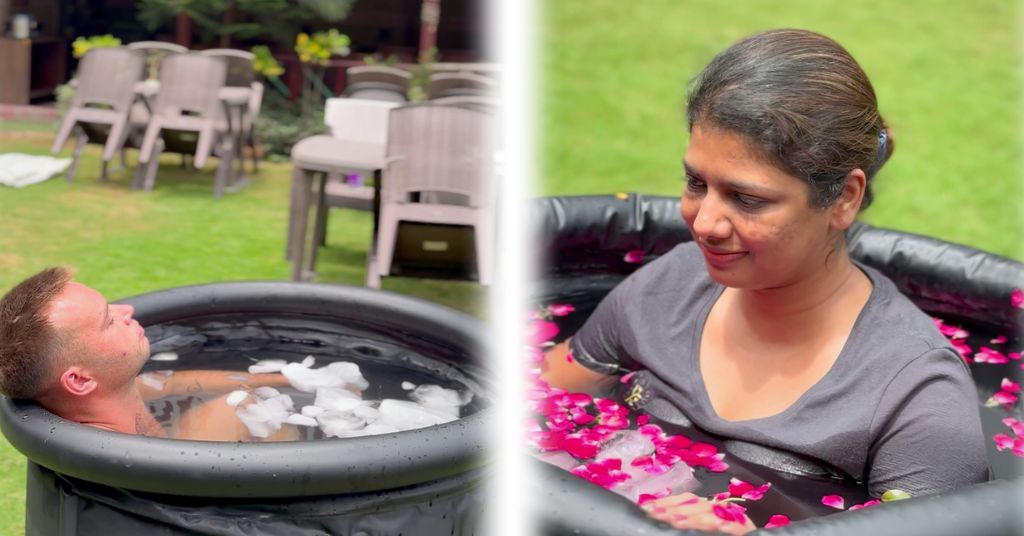
This is one of the most interesting parts of the experience. When you enter cold water, your first reaction may be panic. Your breathing becomes faster. Your body wants to get out. And that’s exactly when the practice begins. Instead of immediately reacting, you learn to pause.
Take a breath.
Notice what’s happening.
Stay aware.
You begin to understand the difference between feeling something and being controlled by it. That lesson can be meaningful when you’re working with emotional pain too.
Cold Plunge and the Experience of Letting Go
People often hold onto grief without realizing it. Sometimes it’s grief for a person. Sometimes it’s for a relationship that ends. Sometimes it’s for a version of yourself that no longer exists. And for someone who connects their emotions with a past-life experience, there may also be a feeling of carrying something very old.
A cold plunge doesn’t magically erase any of this. But it can create a strong moment where you consciously practice letting go of resistance.
You feel the cold.
You notice your thoughts.
You breathe through the discomfort.
Then you step out.
And suddenly, you’re warm again.
It’s a simple experience, but it can leave you thinking.
Why Rishikesh Can Make the Experience Feel Different
There is something about doing inner work in Rishikesh. The mountains are close. The Ganga is always somewhere nearby. The sounds of temple bells, chanting, flowing water and everyday life create a completely different atmosphere from a normal city routine.
Kailash Yoga Ashram’s retreats combine Yoga, meditation, breathwork, emotional healing practices, nature walks and spiritual experiences around Rishikesh. That combination matters. You aren’t spending the whole day thinking about your problems. You practice, walk, breathe, eat, talk with other people, sit quietly, and sometimes, you simply watch the Ganga flow.
Preparing Yourself Before the Cold Plunge
A cold plunge should never be treated like a test of courage. You don’t get extra spiritual points for staying in the water longer than everyone else. The goal is awareness, not endurance. Before entering the water, take a few calm breaths and notice how you’re feeling.
- Are you nervous?
- Excited?
- Scared?
- Curious?
Whatever comes up, notice it. There’s no need to fight it.
What to Focus on During the Cold Plunge
Once you’re in the water, keep your attention on your breathing. Don’t try to force yourself to “be strong.” Instead, notice the sensations.
- The cold against your skin.
- The movement of your breath.
- The urge to leave.
- The thoughts appearing in your mind.
- And then gently come back to the present.
- Observe. Stay aware.
That’s the practice.
After the Cold Plunge
The experience doesn’t really end when you get out. In fact, this can be the most useful part. Give yourself some quiet time afterwards. Sit somewhere peaceful. Journal if you feel like writing, meditate, walk beside the Ganga.
Ask yourself:
“What was I trying to escape from?”
“What did I notice when I stopped fighting the discomfort?”
“What am I ready to release?”
You may not get an answer immediately. That’s completely fine. Inner work doesn’t always come with dramatic movie-style revelations. Sometimes it’s just a small feeling of lightness.
Is an Cold Plunge Really Healing Past-Life Grief?
It’s important to be honest here. There is no scientific way to confirm that a cold plunge can remove grief from a previous lifetime. Past-life experiences are part of spiritual and personal belief systems rather than something that can be medically verified.
So a cold plunge should not be presented as a treatment for past-life trauma or grief. Instead, it can be viewed as a mindfulness-based spiritual practice that may help you explore your present emotional experience.
And that’s valuable in itself.
A Different Kind of Healing Retreat in Rishikesh
At Kailash Yoga Ashram, emotional healing is approached through different practices rather than one single technique. The retreat program includes Yoga, meditation, pranayama, mindfulness, nature experiences and reflection, with the intention of helping participants become more aware of their emotions and inner patterns.
A cold plunge can fit naturally into that kind of journey. Not because the cold water has some magical power. But because it gives you a very direct experience of meeting discomfort without immediately running away from it. And sometimes, that’s the lesson we need. You don’t have to understand every emotion today. You don’t have to figure out exactly where it came from. You don’t even have to decide whether it belongs to this life or a past one. For a few moments, you can simply breathe, feel, and be present.
And standing beside the Ganga after that experience, with the mountains around you and the noise of everyday life far away, you may notice something simple: you are still here, and sometimes, healing begins there.