
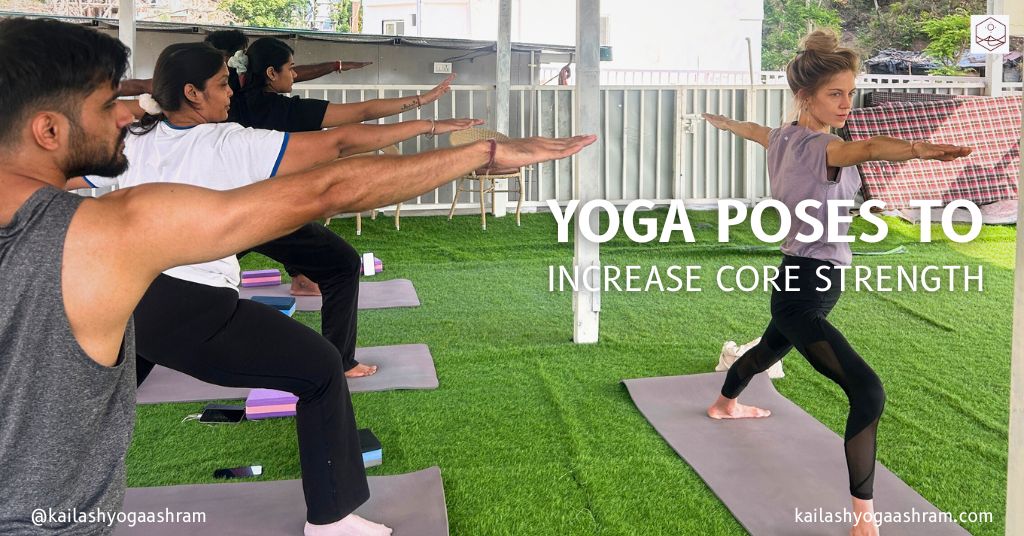
6 YOGA POSES TO INCREASE CORE STRENGTH
Yoga Poses to Increase core Strength
Build a stronger core and a steadier mind through the power of yoga.

Improving your core muscles doesn’t necessarily mean that you have to go to the gym. There is another way to do it, and yoga is an excellent way to build your core strength.
Yoga practices may often be described as calm and meditative, or as incorporating flowing movements from one pose to the next. But yoga, in particular, is an excellent way to strengthen and tone core muscles. It not only supports your core and posture and protects your back, but also provides overall strength and stability throughout your body.
As you all know, developing core strength is vital for keeping a healthy body and a fulfilling yoga practice. Hence, here are our six favourite yoga poses listed below for individuals who wish to increase core strength, whether they are beginners, intermediates, or professionals.
Note: To protect muscles and joints, poses should be entered and exited slowly. If you have persistent pain or a specific injury, you should always contact a competent health care specialist, such as a physical therapist, who can develop a treatment plan tailored to your condition.
Chair Pose (Utkatasana)
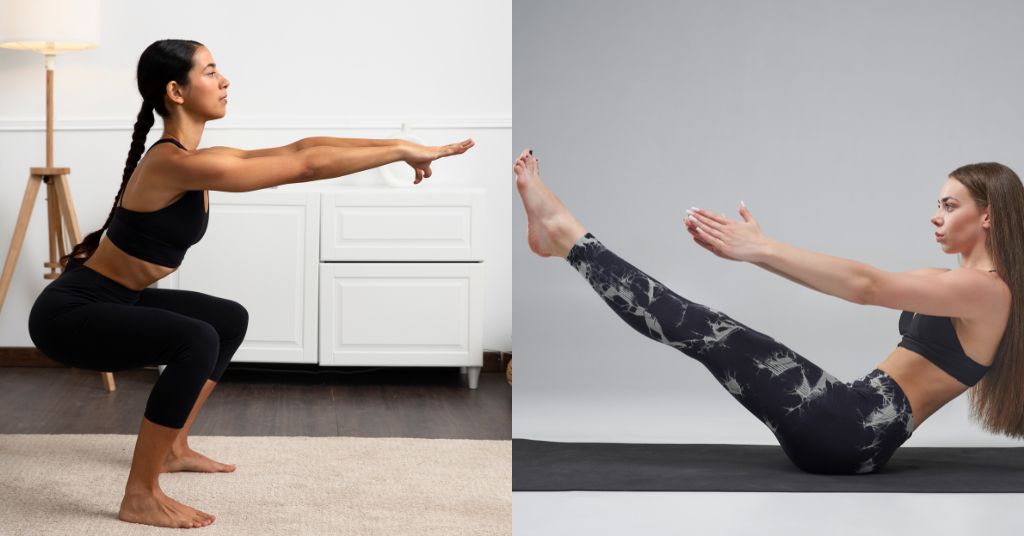
Chair Pose is a complex standing pose that challenges various parts of your body. This pose requires you to maintain balance while strengthening your entire lower body, including your thighs and stabilising your knees. At the same time, the nature of the balance position involved in this standing pose helps to build core strength.
Cosmic Egg Pose (Brahmandasana)
The name might be weird to read, but it is really the name! Now, this pose is an excellent way to warm up and become more mindful of your core strength. It may appear simple at first, but maintaining a regular breathing pattern will rapidly become difficult.
Plank Pose (Phalakasana)
Plank provides the core strength and heat required to progress to more difficult yoga postures. It strengthens several parts of the body, including the abdominal muscles, shoulders, and even the quadriceps, as do many other yoga postures. Overall, planking improves the main core muscles, allowing you to lift heavier weights, move faster, and reduce your risk of back injury.
Side Plank Pose
This is another basic posture that includes a static hold to help you improve core endurance strength. In a side plank, the body is supported on a single arm rather than both arms and both feet, as in a traditional plank. It’s the perfect pose for increasing oblique strength and identifying muscle weaknesses and imbalances.
Dolphin Plank Pose (Makara Adho Mukha)
Dolphin Plank Pose is more difficult than a standard plank. This stance involves coordinating several muscles. It not only strengthens your core but also your arms and improves your balance. This pose might take time to perfect, but your arms will thank you once you do.
Boat Pose (Paripurna Navasana)
Boat Practice is a popular yoga pose for strengthening your core. It’s a static position that helps with stability and movement. The boat posture is difficult because it puts extra strain on your lower abdominals and hip flexors. If the full boat pose is too difficult for you, you can modify it by wrapping a yoga strap around your feet for support.
Conclusion
Developing a strong core is not just about physical strength; it is about creating stability, balance, and awareness in your entire body. Through regular yoga practice, these poses can help improve posture, protect the spine, and build the inner strength needed for both daily life and a deeper yoga journey.
If you wish to explore yoga more deeply and learn these practices under experienced guidance, joining a yoga retreat can be a transformative experience. At Raj Yoga School in Rishikesh, India, our yoga retreats offer the perfect environment to strengthen your body, calm your mind, and reconnect with your inner self while practising authentic yoga in the birthplace of yoga.
Add Comment